EDT, EDP, Parfum, Cologne: What the Labels Actually Mean
No, Parfum isn't always 'the best one.'
Published 4 April 2026·6 min read
A friend once told me he only buys Parfum because "it's the strongest." He was wrong, and he was overpaying.
To be fair, I believed the same thing for years. I assumed the labels on fragrance bottles were a simple quality ladder: Cologne at the bottom, Parfum at the top. Spend more, get more. It sounds logical. It's also not how it works.
The letters on a fragrance bottle (EDT, EDP, etc.) refer to concentration, which is the percentage of aromatic compounds dissolved in the alcohol and water carrier. But concentration is only one piece of a much bigger puzzle, and treating it as a quality ranking will cost you money and lead to disappointment.
The concentration spectrum
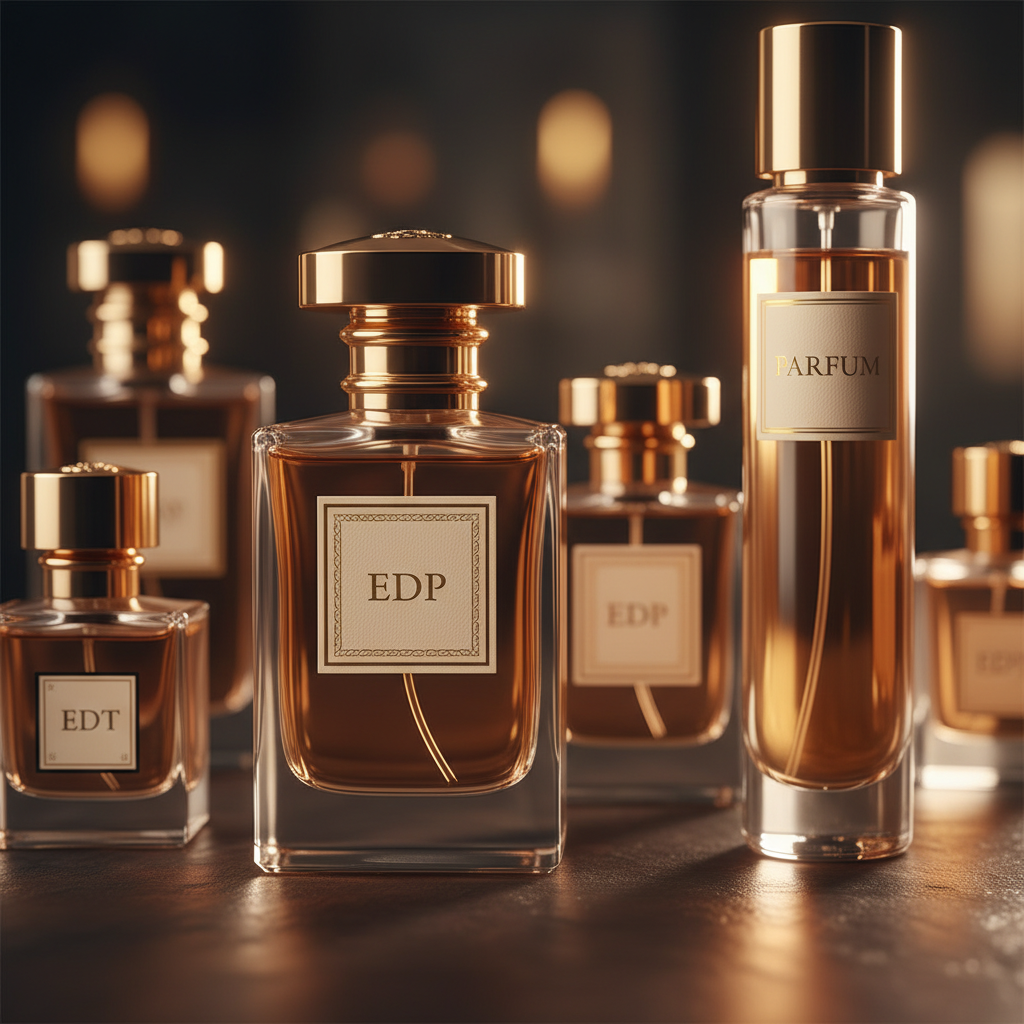
Let's start with the basics. Here are the standard concentration ranges, from lightest to most concentrated.
Eau Fraîche (1 to 3%) is the lightest category. It's mostly water with a whisper of fragrance. These last maybe an hour and are designed to be refreshing, not long-lasting.
Eau de Cologne / EDC (2 to 5%) is often confused with a generic term for men's fragrance, but it's actually a concentration level. Traditional colognes were citrus-heavy compositions from the city of Cologne (Köln) in Germany. Light, refreshing, and short-lived.
Eau de Toilette / EDT (5 to 15%) is the workhorse of the fragrance industry. The majority of mainstream designer fragrances are sold at this concentration. "Toilette" comes from the French word for grooming, not the bathroom. Good for 4 to 6 hours on average, with moderate projection. My YSL L'Homme is an EDT, and it's historically been one of my signature scents. Light, clean, fresh. It does exactly what an EDT should do.
Eau de Parfum / EDP (15 to 20%) is a step up in concentration and usually in price. EDPs tend to last 6 to 8 hours and project more noticeably. My Chanel Bleu de Chanel EDP is a perfect example. Solid longevity, moderate projection, and it just works all day.
Fragrances mentioned
Tap through to explore each scent in the ScentGraph app.
Parfum / Extrait de Parfum (20 to 40%) is the most concentrated form. Also sometimes labelled "pure perfume" or "elixir." Extraits can last 8 to 12+ hours, but they often sit closer to the skin rather than projecting outward. The experience is intimate rather than room-filling.
ℹ️
These ranges are guidelines, not regulations. There's no legal standard that defines exactly where EDT ends and EDP begins. Each house sets its own concentrations, and some brands use different naming conventions entirely ("Intense," "Absolute," "Elixir").
The myth: higher concentration = better performance
This is the big one. The assumption that a Parfum will always outperform an EDT is simply not true, and here's why.
Ingredient choice matters more than percentage. A fragrance loaded with 20% light citrus molecules will still fade quickly. A fragrance with 8% ambroxan (a powerful synthetic base note) might last 12 hours. The type of aromatic compounds matters as much as, or more than, the quantity.
Projection and longevity are different things. Extraits often last longer than EDTs but project less. They're designed to create a personal scent bubble rather than announce your arrival from across the room. If you want people to notice your fragrance from a distance, a well-made EDT might actually outperform a Parfum in terms of sillage.
Skin chemistry plays a role. Some people's skin amplifies lighter concentrations beautifully. Others burn through even an Extrait in a few hours. Your skin is the variable that no concentration label can account for.
Real examples from my shelf
Let me give you some practical examples from fragrances I actually own.
BDK Rogue Smoking: I own the Extrait. I've also tested the EDP. And honestly? I love the Extrait, but if I already had the EDP, buying the Extrait would feel pointless. They're close enough that the price jump doesn't justify the marginal difference. This is a case where the lower concentration is arguably the smarter buy.
Creed Green Irish Tweed: This is technically an EDP, but Creed plays by its own rules when it comes to concentration labelling. GIT performs like a beast regardless of what the label says. I get 8+ hours easily. If someone told you "Creeds don't last," they're wearing them wrong or their skin chemistry isn't cooperating.
YSL La Nuit de L'Homme: This is an EDT that's been my nighttime staple for years. Complimented by my ex numerous times. It doesn't last as long as I'd like (4 to 5 hours, being honest), but the projection in those first couple of hours is gorgeous. I'd rather have an EDT that smells incredible for 4 hours than an EDP that's mediocre for 8.
Why houses release multiple concentrations
Here's something that surprised me when I first learned it: the EDT and EDP versions of a fragrance are often not the same fragrance at different strengths. They're frequently reformulated to create different experiences.
Brands do this intentionally. The EDT might target summer and casual wear. The EDP might target cooler weather and evening occasions. The Parfum might target fragrance enthusiasts who want depth and complexity. They're not just turning up a dial. They're composing different versions of a theme.
⚠️
Don't assume the Parfum version of your favourite EDT will smell the same. They often reformulate significantly. Always sample before upgrading to a higher concentration.
What about 'Cologne' as a category?
In everyday language, "cologne" has become shorthand for "men's fragrance," especially in Australia and North America. But in the fragrance world, Eau de Cologne is a specific concentration level (2 to 5%), not a gendered category.
Adding to the confusion, some luxury houses use "Cologne" as a style designation rather than a concentration indicator. My YSL Cologne Bleue uses "Cologne" to suggest a lighter, fresher style, but its actual concentration doesn't strictly match the traditional EDC range.
The bottom line: if someone asks whether you're wearing cologne or perfume, the honest answer is probably "yes."
So what should you actually buy?
My honest advice? Stop choosing based on concentration labels and start choosing based on how the fragrance smells on your skin after two hours.
If you want the best value, EDTs are often the sweet spot. They're the least expensive per bottle, and plenty of well-formulated EDTs last 6 to 8 hours. My Givenchy Gentleman EDT punches well above its price point.
If you want longevity, look at the actual ingredients and read performance reviews rather than relying on the label. An EDT with ambroxan, musks, or woods in the base can outperform a floral EDP all day long.
If you want to try the Parfum, go for it, but sample first. You might discover that you actually prefer the EDT version. That happens more often than you'd think.
If budget matters (and it should, this hobby gets expensive fast), remember that you can reapply an EDT for the cost of a few extra sprays. Two spritzes of an EDT at lunch can extend your wear time past dinner and still cost less per wearing than a single application of the Extrait.
The labels on fragrance bottles aren't a quality ranking. They're a rough indicator of concentration, and concentration is just one variable in a complex equation. Once I stopped chasing the "highest" label and started focusing on what actually smelled and performed best on my skin, I started spending less and enjoying my collection more.